Showing posts with label gifted child. Show all posts

Monday, March 13, 2017

The Difficulties of Being Gifted - Confessions of a Gifted Parent with Gifted Kids

People think that being gifted makes one's life easy. The truth is that gifted people also have their share of difficulties.


Let me share some examples with you.

I had not been sleeping well for the past nights. I wanted so much to sleep early. But I couldn't. Why? I found it hard to make my brain stop working. My brain has been so active. I could not fall asleep even though my body was exhausted. I had so many ideas. I wished I had a wire or something that allows my brain to transfer those thoughts to my computer so I would remember all those ideas the following day and I could sleep soundly at night.

It's great to have a lot of wonderful ideas for upcoming work projects. But it gets overwhelming and I wish that they would come at a time when I'm not supposed to be sleeping already.

In fact, I'm having a headache as I write this post because I could not go back to sleep even if I want to. 

Sleep has been an elusive friend to me. I found it difficult to nap when I was still a child. When I was a child, I would just pretend that I'm sleeping and wait until I hear my grandmother snore. ;) That's the only time I open my eyes and I start moving again in my bed.

When I became an adult, there were many nights when I experienced insomnia.  

Thus, I'm not surprised that my kids are not the type who easily fall asleep whether in the afternoon for naps or at night. Like me, they have a lot of ideas going on in their heads. Or they'd rather read than sleep.

In spite of this knowledge and the struggles, I still do my best to help my kids get as much sleep as they can. I don't force my eldest who is now 8 years old to take a nap, except when I know that he is under the weather. But I still require my younger kids to take a nap. If they really could not fall asleep in the afternoon, I just ask them to read quietly in their beds. Now, reading is something that they can obey easily. But "quietly" is another story!

Another difficulty of the gifted is knowing things that are not pleasant (to say the least) because the gifted are highly intuitive and insightful. Gifted people may have the ability to read or identify other people's motives and intentions even if these people try their best to hide these. I have personally experienced this countless times. I am amazed at how correct my intuition is a lot of times. But this is not always a positive experience because some of the things I notice or realize can cause me to be disappointed, hurt, angry or sad. It doesn't help that gifted people are also extra sensitive.

There are many other difficulties that gifted people deal with on a daily basis. But I will just mention one more which I and my gifted kids need to deal with daily: containing and managing our big emotions. 

Gifted people are quite intense. We usually have big emotions. I used to think that I can do a good job at handling my emotions. But when I became a parent of gifted kids, I discovered that dealing with my kids and the chaos that they bring into our home can overwhelm me many times during the day. I lose my temper at least once a day. The very organized me gets easily annoyed and overstimulated by my very messy, imaginative and kinesthetic kids. That is why "Slow to anger and abounding in steadfast love" has been my mantra for years now. That means I have a lot to improve on in this area. And that's not just for me but for my kids also. The more that I learn to manage my big emotions even when I'm triggered by their noise and mess, the more effective I will be in helping my kids learn to manage their own emotions. I think this is one of my most difficult challenges at this point in my life as a parent.

Last night, I read a blog post that reminded me to parent with grace rather than anger. I think I really need a lot of that... grace. I realized that it's not easy to control these intense emotions even when you are already aware of your tendencies. I'm doing my best to practice restraint and to be more mindful. I'm also doing my best to teach my kids to be more considerate of the people around them, I included. 

So, are you surprised to read about these difficulties that gifted people experience? Find out more as you read the entries of the other bloggers in our blog hop here. 


Monday, February 13, 2017

Is Your Child Gifted? Find out at the Giftedness 101 Talk on February 25

Some say that all children are gifted. Is that true?

What does it mean to be gifted?

If not all children are gifted, how do you know if a child is gifted? What are the signs?

Can children with disabilities be gifted as well?

Is giftedness something acquired through study techniques or learned through mental programming?

Or is giftedness something that a child is born with?

What if a child is gifted? What does a parent need to do?

What's the difference between typical children and gifted children?

Do gifted kids have special needs?

Do you have all these questions in your head as a parent? Are you wondering if your child is gifted?


When you become a parent, your world expands. When I learned that my eldest child is gifted, I devoured every literature I could find on the topic. I attended whatever seminars, workshops or conventions that fit my already busy schedule. I was eager to learn and I was motivated to learn for the sake of my child and for my sake. When I discovered that my second child is also gifted, the more I became determined to learn more about this field. This is because I am a parent of gifted children and I need to learn how to support my children’s special needs and to help them reach their full potential.


Because of this also, I have chosen to help raise awareness on giftedness and to help my fellow parents understand their gifted kids.

On February 25, 2017, I will give a talk titled Giftedness 101. This will be at Playworks, SM Aura Campus from 2 -4 PM.

The topics that I will cover are the following:
  • Are all children gifted? What does it mean to be gifted?
  • What are the signs of giftedness or twice exceptionality, especially in young children?
  • What are the advantages of finding out if your child is gifted or not?
  • What are the advantages of hands-on parenting to the gifted or twice exceptional child?
  • What should you do when you see signs of giftedness in your child?
  • What are the advantages of homeschooling gifted or twice exceptional kids?
  • How do you homeschool a gifted child?

Aside from learning more about giftedness and twice exceptionality, parents will also have the opportunity to meet other parents of gifted and twice exceptional children and thus find a support group who will understand the same challenges and joys that they experience.

The registration fee is Php 750. The Early Bird Rate of Php 650 is available until February 14, 2017 only. The parents of students from Playworks get a discounted rate of P500. The registration fee already covers the handouts and light snacks. The snacks will be provided by Mommy Bakes PH.

I'm very excited for this! We're also giving away to the first 20 parents who will register and pay for the GIFTEDNESS 101 talk Gift Certificates worth Php 3,000 each courtesy of KIDS ACTS PHILIPPINES (KAPI). This performing school has been the training ground of the Aliw best Child Performer and The Voice Kids Philippines semi-finalist, Noel Comia Jr.

We will also raffle some prizes from Filway Marketing Inc. who is one of our sponsors. Filway provides good quality learning materials for children. I especially like their product called A Child's First Library of Learning.

Participants get a chance to win this during the raffle at the Giftedness 101 talk.

We will also raffle off several educational toys and materials from Mom and Milly Educational Toys.

This is just one of the toys we would raffle off.


Click here to register for this talk. We have very limited slots so I suggest that parents secure their tickets fast. Buy your ticket here.

I am blessed to get the support of the following sponsors and media partners: Playworks Early Childhood Center, Kids Acts Philippines, Inc. and Filway Marketing Inc., Mom and Milly Educational Toys, WheninManila.com, Experience of a Super Mommy and The Filipino Homeschooler.

Wednesday, July 6, 2016

How to Raise a Prodigy: Lessons I Learned From Parenting One

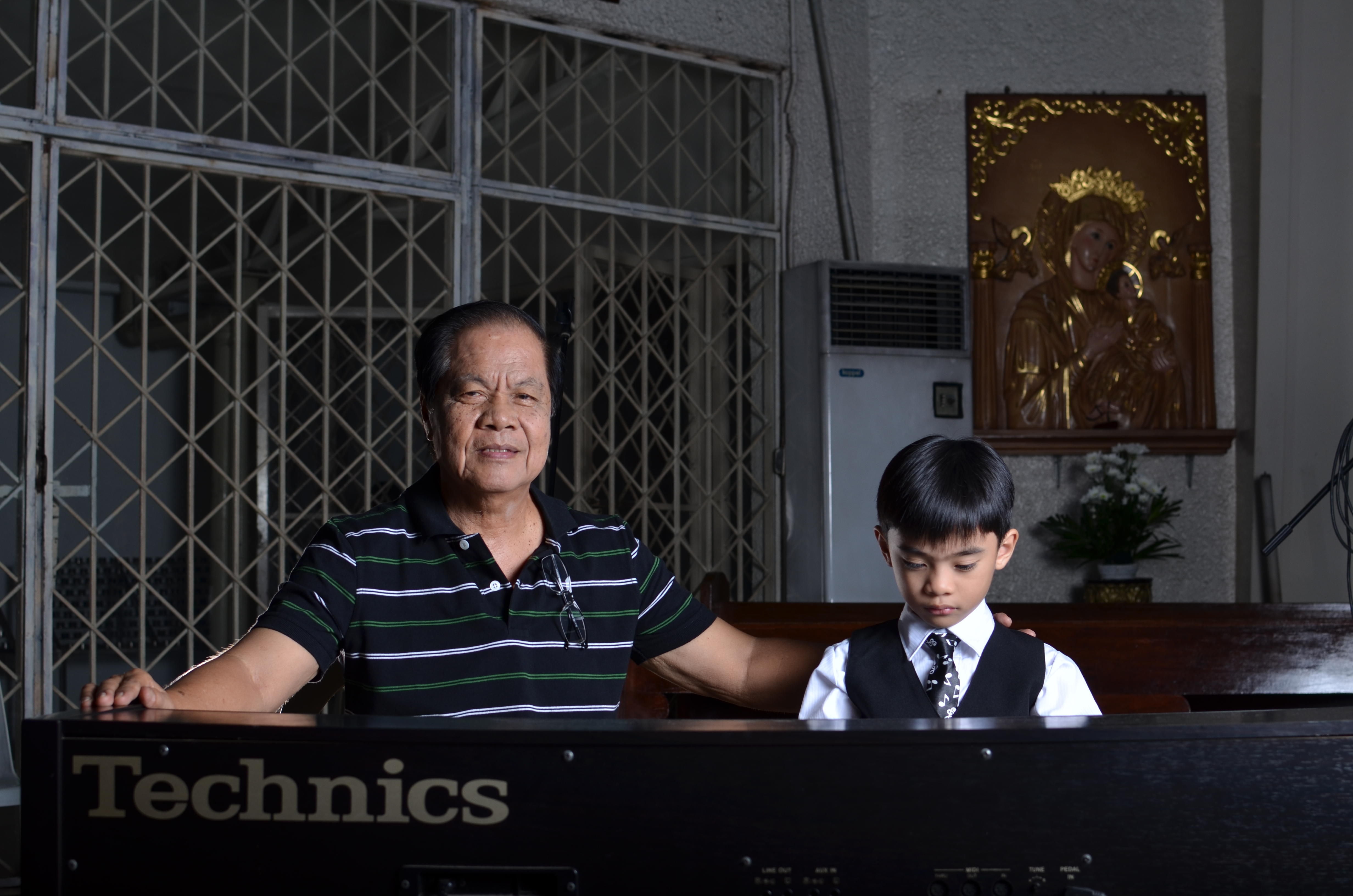
I bumped into one of my mentors one night in a coffee shop. He asked about my me and my family and I happily shared some updates, including my eldest son's latest adventures on the piano. He and his sons were amazed at my story. He said that my son is a prodigy. It was the first time I considered that. He's right. We have a musical prodigy in our house.

He makes learning music, whether singing songs or playing songs on the piano, look so easy. To him, these activities are as natural as breathing.

I used to play a cd of nursery rhymes/songs to him when he was still a baby. Then, we would dance to the tune of those songs. I would also teach him the actions for those songs. When he became a toddler, he started showing remarkable developments in language and music. He started saying some words before he turned 1 year old and he started singing songs when he was over a year old. When he was already 2 years old, he could sing not just nursery songs but even other songs that he doesn't hear every ay as long as heard them a few times. We loved asking him to sing songs for us and he would sing a song we request him to sing at the drop of a hat! He was an adorable baby!

He liked playing with musical instruments. His first favorite was the guitar because that's what he saw his Dad playing. We also got him a small guitar. He would imitate his dad every time his Dad practices. During Masses, he would sit beside the other guitarists in the choir. He wants to be part of the choir too. He also wants to have his own chord book even though he was only 2 years old then! It looked so funny. But we kept on letting him do what he wanted to do and what made him happy. Eventually, he shifted to our small keyboard because he was having a hard time doing the chord on his guitar with short fingers. It was easier for him to play the piano because he only needed to press the keys.


In the above video, Yanthy was only 3 years. He was singing a song (Only a God Like You) by Tommy Walker, one of his favorite Christian artists. He was trying out the new guitar that his Dad gave him as a gift for his 3rd birthday.

Then, when he was around 4 and half years old, we move to a new house near a Catholic church. We started going to Mass daily. I noticed that he would always look at the pianist serving during Masses.

One day, I got the surprise of my life when I heard someone play some of the Mass songs on our keyboard. It was my little boy! I was amazed because no one taught him. My husband and I do not know how to play the piano. I bought our keyboard just before I got married because I wanted to learn how to play the instrument. But I didn't get to have formal piano lessons and I found the books my husband gave me challenging. In short, I didn't learn. Then, here comes my little boy, playing on our piano one day. He learned by simply watching and listening.

Last night, he served in the Mass again in our parish. He has been serving as a pianist in this church since he turned 7 years old last year (October 2015). He played a new song titled Here We Are. He just learned this song yesterday. After a few hours, he played it as the entrance song in last night's Mass. If he is in the mood and we provide him with the needed resources (like chords, music sheets and ample time to play on the piano), he would learn at least one new song each day.

After the Mass last night, he mentioned to me and a few of our friends that there are now 62 music sheets in his tablet. I was amazed! That means that 62 is the minimum number of songs he has learned to play on the piano! And he only started formal piano lessons around 1 year ago! But that's not all, I said minimum because that number does not include the songs he learned without a music sheet, which is so much more because he first learned to play oido (by ear). He also learned some songs by using the chords only and he improvised on the accompaniment. That number also does not include the nursery songs, classical music, Christmas songs, worship songs, folk songs and many other songs he learned! He said that if we list or count all the songs that he has played since he started, it must be more than a hundred. I think he's right. Wow!

Now, let me share with you the definitions of prodigy that I found.

What is a Prodigy?


From Dictionary.com: a person, especially a child or young person, having extraordinary talent or ability: a musical prodigy.

From the British Dictionary: a person, especially a child, of unusual or marvelous talents.

From Mirriam-Webster.com: a young person who is unusually talented in some way.

From Cambridge Dictionaries Online:

(Prodigy in American English) a child who shows a great ability at a young age: a child prodigy on the piano.

(Prodigy in British English) someone with a very great ability that usually shows itself when the person is a young child.

From Oxford Dictionaries: a person, especially a young one, endowed with exceptional qualities or abilities.

How Do You Raise a Prodigy?


1. Be observant. 

It's so easy to dismiss a child's accomplishments when a child is still growing. This is because a child's accomplishments look ordinary in the beginning. What children exhibit at an early age are skills that most adults already can do; and so, the adults around the child can easily ignore these milestones as ordinary or typical. But when one looks closely and uses the guidelines for achieving milestones, parents can sometimes notice what is extraordinary in their children's milestones or development. This is what helped me discover early on that my eldest son is gifted. I would regularly review the milestones for babies and toddlers from a book that my husband gave me. I would check what things my baby was already capable of doing. I would do this month after month. I would do advance reading also. When I did this, I realized that my eldest was hitting his milestones quite fast, not just in months but in years sometimes. At two years old, he has already mastered concepts taught to pre-schooler and kindergarteners. He was also reading at that age and had a vast vocabulary.


This is a video of Yanthy playing the song Immaculate Mother, which is sang during the novena to Our Mother of Perpetual Help. He learned this oido.

2. Believe in your child and in his capabilities. One of the traits I noticed in gifted children or child prodigies is that they have self-confidence. They are risk-takers and they like challenges. They are not afraid to try new things especially in their area of interest. As parents, we can help build their confidence by believing in them,  in their potential and their capabilities. When my son was just starting to play in the Mass, I was so nervous. I kept praying that he would not mess up the Mass by playing the piano. I would ask him repeatedly before the Masses if he is sure he can play the songs right. I would listen to him practice at home. When I hear him play the songs perfectly at home, I am less nervous. If not and he decides he will still play it in the church, I would be praying fervently at the pews. So far, he has been playing well. I'm glad I supported his decision to try and believed in his potential and new-found skill. These days, I still get nervous when he plays new songs. But my confidence in his has also grown in the past year that I saw him improve a lot on his chosen instrument. I noticed that my confidence in him helps build his confidence also. He searches for my look of approval whenever he plays. He feels happy whenever I praise him and his talent.


12052584_1141282612552130_1326117929550267416_o
At my eldest son's first solo piano concert and 7th birthday celebration.

This next video is just last month. It was his first time to play this song for the Novena to the Sacred Heart of Jesus. He started learning it around an hour before the Mass. Then, he played it as the recessional.


3. Provide for your child a nurturing and supportive environment. It helped a lot that we provided for our son a number of musical instruments he can play with when he was growing. Since we noticed that he likes making music, those are the kinds of toys we gave him. We also gave him a keyboard or digital piano with 88 keys when he asked for it and we got confirmation from his first piano last summer that he quickly outgrew our small keyboard. I also watched him most of the time when he practices and I even take videos of him practicing. Whenever he has learned a new song, I would document it by taking a video of him. He feels happy that I show him my support by doing these things. I praise him every time I see him practice, try to learn a new song or when I hear him play a song well or perfectly. I let him hear me praise him in front of other people. I share his videos to our relatives and friends. I tell him the compliments that other people say about him. My husband and I provide him with books and opportunities that help him achieve his goals.
BGC_4051
One of my ways to destress daily is to listen to my eldest son play music on the piano.


4. Find mentors for your child. 

Since I am not as gifted in music as he is and my husband is not a piano player also, we looked for possible mentors or teachers for our eldest son. Good thing, the church pianist happily mentored him. Also, I found a Yamaha teacher who lives in our village too so we asked her to go to our house to give him formal piano lessons. then, I discovered a performing school that helps children get ABRSM certification for their lessons. We decided to enroll our son in their piano class last year and this year during the summer months. (You may read about our summer experience here in my previous post.) Right now, he's still preparing for Grade 1 certification on the piano.

BGC_4120
This is the pianist in our church who inspired in my son to dream of becoming a pianist in our church one day. He not only inspired that dream but he also helped make that dream become a reality. He also taught me and my husband to believe in our son and his abilities more. We owe him a lot!

5. Get out of the way. This is one of the hard lessons I am learning as I raise a prodigy. My natural tendency as a parent is to protect him. I don't want him to be too stressed. I don't want him to be embarrassed. I don't want him to be frustrated. I tend to throw a lot of caution to him. It's not that I believe in him. I do. But I just couldn't shake the fact that he's just a child. He's my little boy. But time and again, he proves that though he has the body of a little boy, he possesses great talent in music. What stresses me or terrifies adults like me, can challenge him positively. I think this comes from his innate desire to learn and do good in his field of interest and in his knowledge of his own capabilities. I remember when he first told me that he wants to have a piano concert for his 7th birthday. I could not believe my ears the first time he said it. I thought he was not serious. But he turned out to be; so, I supportive him and he did get what he wanted. (You may read about it here in another blog post.) Another example is when he tries to learn pieces that are above his level. He doesn't care if a song is for more advanced piano players. As long as he likes the tune, he would start learning it. He is unfazed even when we or his piano teachers would tell him that those pieces are played by those who have been playing the piano for years. I'm glad that over time, I have learned to get out of his way more and more. This has allowed him to soar and do the things he is most passionate to spend time on. Of course, I still give him a lot of reminders, but I give him more freedom now after realizing that he is indeed no ordinary child.

13331068_1278580955488961_4661254999055153727_n (2)
My eldest son and I at his latest piano recital.

I'm really grateful that I made the decision to leave my full-time job years ago. Otherwise, I'm not sure if we would have noticed right away that our son is gifted. I'm thankful that I was able to find and provide the necessary interventions that helped us support his unique needs. I'm also happy that I'm still able to contribute to the family income even as I stay home most of the time because this raising a prodigy can also be costly.


* This post was first published at HandsOnParentwhileEarning.com.

Wednesday, August 12, 2015

How Conversations in a Child's Home Shape a Child

"The most influential of all educational factors
is the conversation in a child's home."

I shared this quote by William Temple at the Hands-On Parents while Earning or H.O.P.E. Summit last Saturday, wherein I was the main speaker and facilitator.


I shared that one of my ways of being a hands-on mom to my kids is choosing to homeschool them. But I also believe that homeschooling is not for everyone.

You may not choose to homeschool your child. But you can definitely influence the conversations that your child is exposed to. That is one way of being a hands-on parent.

One of the reasons I chose to stay home full time with my children is because I want to have a lot of conversations with them. I also want to monitor and influence the kind of conversations my children would be exposed to.

The kind of conversations that a child engages in or hears at home and even outside the home will shape the child’s mind, heart and soul.

Let me share with you some of the topics that were the subject of my recent conversations with my kids.

Yesterday morning, while having breakfast with my 3-year-old son, we talked about Moses and the parting of the Red Sea. We've read this Bible story countless times and we have done a lot of activities related to it. This story made a positive impact in his young mind and heart. He actually loves pretending to be Moses (complete with costume and staff in hand).


My 3-year-old son during breakfast with him the other day.

The other day, during my conversation with my 3-year-old son, he said that it's good that it rained because plants need water, air and sunlight. That same day, he answered my question correctly when I asked him if he knows who the Bread of Life is or the Bread that came down from heaven. He immediately answered, "Jesus!"


That same day also, my eldest son who is 6 years old, my second son who is 3 and I talked about the books of the Bible. We also talked about trusting God's Word. This was inspired by the story where Jesus asked Peter to step out of the boat and walk on the water.

During breakfast with my eldest one morning, he talked about the rain and how it goes to the dams and goes to the pipes that households get water from. He kept talking about the importance of rain to help maintain the water supply of households. This conversation was triggered by the scheduled water interruption in our area and by the preparations that we made for this (filling up our water containers with water).

The people that your child converses with are powerful influencers. Thus, the quality of conversations that a child is exposed to is a big factor in the formation of a child.

It would be good to ask yourself who it is that your child converses most of the time when he is at home. Is it you? Is it your maid or yaya/nanny? What is the usual topic of their conversations?

I noticed that when my children and maids converse, the maids usually tell stories about the showbiz personalities they watch on tv or movies. They talk about the shows they have seen. They teach my kids the popular songs they like to listen to. These are not necessarily bad but I do not like my kids to be hearing about pop culture all day long. There are also concepts and topics that I would rather my kids learn first instead of these unnecesary information.

That is why I make sure my children spend more time with me and converse with me longer. I also suggest the kind of music they can listen to or songs they can teach my kids to sing. I provide them with books that they can read to my kids while I am working or doing something else. These books serve as spring board to better conversations between my children and our maids.

Now, let me enumerate some of the advantages of having frequent and quality conversations with your child.

1. You provide adequate mental stimulation to the child. Children are always learning. Even simple conversations with them are learning moments for them. They are like sponges when they are young. That is why it is recommended that caregivers talk to babies even before they learn to speak. And once children learn to speak, engage them in conversations so they could practice articulating their thoughts.

This is particularly important in our family because I have a gifted child and a potentially gifted younger child. Since my eldest son is gifted, he usually likes to talk about things or topics that are not the usual subject of conversations for kids his age. If I put him in a traditional or even in a progressive school where he is forced to interact with kids his age, these kids might not be able to discuss the topics he likes to discuss with them because his intelligence is already at a higher level even though he is only 6. 

For example, he likes classical music and he talks about the music of the masters (Bach, Beethhoven, Mozart) a lot. If I let him converse with kids his age or our maids only, the amount of mental stimulation that he needs would not be satisfied. So, I make sure that I get to talk to him about his interests and that I find other people he can talk to about these things. 


My 6-year-old playing the piano as soon as he woke up
even though he had a fever.

2. Your conversations with your child gives him an idea of what he can discuss with you or what topics he can bring up with you. You also fuel your child's curiosity and thirst for knowledge or learning. I do my best to maintain very open lines of communication with my children. I let them reason out with me and I do my best to explain things to them. We talk about almost anything that they want to talk about. That is one of the advantages of being home with them. When they have a question, they can come up to me right away and ask me about it. I can also pause from what I'm doing (most of the time) to answer their questions.    

The conversation I shared earlier about our faith is an example. By discussing these topics in our daily conversations, I'm communicatiung to them that they can talk about their faith anytime. It's not something that they can talk about only on Sundays or when they are in prayer meetings or in retreats. I love that this is the kind of culture that we are building and experiencing in our family because I want my kids to know that our faith should be lived out in every area of our life.

When my children ask questions, I do my best to answer them to the best of my ability. Sometimes, I research or look things up so I can get back to them with adequate answers. When you leave your kids in the company of maids or yaya/nanny most of the time, their questions might not be answered to their satisfaction or not at all. Some maids or yayas/nannies do not have the patience and knowledge to answer the questions of the children entrusted to them. 

3. You can build your child's self esteem through your conversations with him. I read somewhere that the way you talk to your child will become his inner voice. You can use your conversations with your child to make him believe in himself or his capabilities more.

One of the main messages I like to communicate to my sons everyday is that they can do whatever they set their minds on. I let them explore beyond what is typically expected for their biological ages. I don't want them to be limited by what was considered the norm.

For example, I let my 3-year-old play with puzzles that are recommended for kids double his age. I encourage him with my words that he can try if he wants to. We also let him play piano in a real keyboard.

We do the same with our eldest son who is a piano prodigy. We encourage him to play the pieces or songs he fancies even though these are pieces that are usually played by piano students much older than him or by adults already. We encourage him to try and learn. The amazing thing is he is able to do things way beyond what is expected of someone his age. This gives him greater confidence to keep trying new things even when he hears other people say that these pieces or songs are difficult. He doesn't easily give up. 

4. You get to know your child based on your conversations with him. I think this is one of the greatest benefits of having frequent and quality conversations with your child. You get insight into the mind and heart of your child. It has been said that the mouth speaks what the heart is full of. Naturally, your child will talk about the things close to his heart or what he thinks about a lot. If you hardly talk to your child, you would not have an idea of his likes and dislikes, what makes him sad or happy from day to day, what his dreams or plans are, what his current concerns are.

I know that my eldest son loves his younger siblings very much because I get to talk to him and in our conversations he tells me that he is learning the songs he is playing in the piano because he wants to play them for his brothers. I know that he loves God and that he has a heart for service because he told me that he is learning to play the songs in the Mass because one day he wants to serve as pianist in the church. I know that it makes him sad when there is no music during Masses and when there are no musicians serving because he whispers to me during Masses that he wished he could play the piano when there is no one to play in church. I know that he has genuine concern for his playmates and friends because one time he prayed and told me that he wished that it wouldn't rain because it was the house blessing of his friend's (our neighbor's) house.

5. Last but not least, your child will pick up or imitate the manner by which the people around him speak. He will imitate the words being used in conversations as well as the manner by which the people around him speak.

I encourage you to take time to observe your child and to listen to him speak and to really pay attention to him as you converse with him. Notice whose influence is evident. Is it your influence or someone else? Are you happy with what you are witnessing or not? In case you're not satisfied, what actions or adjustment are you willing to make?

Investing time in your conversations with your child will surely reap many benefits. But the main benefit your child will get from your regular conversations with him is the knowledge that he is worth your time and attention.

If you want to learn more strategies and tips on how you can be more present in your child's life and have more conversations with him, I invite you to check out my online coaching program called iHOPE. You may read more about this program for parents here.

Monday, April 20, 2015

Gifted at Different Ages and Stages

This blog post is part of the GHF Blog Hop for April.
Check out the other blog posts on this topic here.

Giftedness was not in my vocabulary when I was a first-time mom. I equated the word gifted with talented, very good or highly-skilled. 

But since my eldest son was assessed to be potentially gifted when he was 2 years old, I started reading more about giftedness. I have learned more about the topic since then.

I have also witnessed and noticed more of the traits that I have read about gifted children in my eldest son.

Then, I had another son, my second baby. 

We have not brought him to our developmental pediatrician yet, although he is already 3 years old. But I know that he is also gifted like his older brother. Why? Because I now know the signs and traits that gifted children manifest. I see some of his older brother's traits in him, which are mainly overexcitabilities in different areas and advance development in language and music. He exhibits giftedness in other areas, too. But they have a lot in common.  

Sadly, even though I already know that he is gifted just like his older brother, I still make a lot of mistakes in dealing with him and some of his behaviors.

It has been over 4 years now since my husband and I learned that our eldest son is gifted. There's still a lot that we have not figured out though. We still struggle a lot in putting our very active kids to sleep, getting them to finish their meals within an acceptable time frame and teaching them to be obedient to us. Each day is not complete without a power struggle. I'm still not used to their noise, mess and constant chatter. 

This past week has been extra challenging for me because our two helpers left. I can't help but feel overwhelmed and drained in the past days. I can't keep up with my kids' energy level on top of caring for my 4-month-old baby boy, whom I also breastfeed. This gifted adult craves for time alone, silence and reflection; but I could hardly get that, since my kids sometimes do not want to nap and they sleep late at night.


That's me and my gifted boys during my third baby's baptism. 

What I had been doing and what helped me survive these past week was to pay more attention to my gifted kids' behaviors that warm my heart and make me happy. 

So, I consciously took note of their creativity and powerful imagination. I did my best to listen to most of their stories and to play with them during their pretend plays. I patiently read books to them and told them stories, too; even though, I was already sleepy and my throat was hurting. I reminded myself that I'm blessed that my kids share my passion for books. I savored the music played by my eldest son in the piano. I praised him and gave him tips on how to improve the books that he has written. I chose to be grateful for the opportunity to mentor him. I chose to smile at my 3-year-old who kept hugging me, saying "I love you" to me and singing to me the birthday song this past week. 

I'm really thankful for these adorable, sweet and smart kids. I just feel exhausted this week doing my best to keep them safe, teaching them good behavior and values, and making sure they are well-fed.

I hope and pray that my husband and I would learn more ways on how to better parent our two older kids; so that we would do a better job in raising and parenting our third child, who at infancy is already showing signs of giftedness like his two older brothers. I noticed that he also gets distracted while nursing. His motor skills are also developing fast. Sometimes, he seems to be conversing with us. He just can't articulate the words yet but it's obvious that he is trying to tell me/us something. I do my best to respond to him but he still gets frustrated sometimes.

I'm thankful that I have been part of forums or support groups for parents with gifted children. I've been learning a lot from their sharing and stories. I also feel less alone in dealing with my struggles and challenges.     

We still have a long way to go. But stories from parents who have gone ahead of us and who have raised gifted kids successfully encourage and inspire us. Their stories also remind me that parenting gifted children gets easier as the kids grow older and mature.  

What challenges and joys are you experiencing now at this stage in your gifted kids' lives? Feel free to share in the comments. 

Monday, March 16, 2015

A Day in the Life of My Gifted Homeschoolers is Like Fireworks Display

Surprises. Stories. Songs. Struggles. These are four words that usually characterize a day in the life of my gifted homeschoolers. But if I put them together (which is actually what really happens each day), I would choose to describe our typical day as a fireworks display because it's a combination of many explosive things that happen during the day. Sometimes, it's yellow. Other times, it's green or orange. Many times, it's pink or red because of the intensity of emotions displayed. The sound would usually range from loud to very loud! ;)


Let me first talk about Surprises and Songs.

My two older sons whom I homeschool are 6 and 3. They are very musical kids who burst into songs without warning. Because they are music smart, they do not run out of songs in "their playlist". They are either belting out a song that is their current favorite or they could be singing a new song they recently heard. That's one area where I usually get surprises from my boys. They surprise me with the new songs that they learned. They do not surprise me on purpose like they call my attention and ask me to listen to them sing a new song. I just get surprised during the day, at home or in church, when I hear them sing something new that I did not expect them to know.

Last year, my eldest son took a serious interest in learning how to play the piano. He started studying how to play the piano by simply watching the pianist in our church. Then, he progressed to playing the piano oido. Since that time when he decided that he will learn to play some songs in the piano, every day has been more exciting in our home. He would surprise us with new songs he has learned mostly on his own. In less than a year, he learned to play the songs typically sang during daily Masses and a lot of them he learned to play on his own. A few weeks ago, my younger son who is 3 years old, surprised all of us also when he started playing a song in the Mass as well. He also learned to play part of the introduction to one of the songs in the Mass. I love these pleasant surprises from my boys!

When my eldest son was younger, he would surprise me with the new words he would learn to say. This progressed to new words he learned to read. Eventually, this progressed to new things that he learns. Mentoring or teaching a gifted child is definitely an exciting adventure.

Now, let's move on to Stories and Struggles.

My little homeschoolers love stories. We tell stories to them a lot of times during the day. They also like telling stories. Our stories mostly come from the books that we read each day. A lot of them are a product of our imagination too. Even my children's food or plate have a story! Now, that makes it Story plus Struggle! It has been a struggle for us to make our eldest son eat fast enough so that he would finish his food in less than an hour. So far, we have been successful and most days, he finishes his meal in less than 30 minutes. In the not so distant past, finishing his meal in less than an hour would fall under Surprises. I have slowly learned how to play along with their meal time stories in such a way that I could make them eat faster. My strategies are not 100% effective though.

The other area where our Struggle comes is from the fact that my kids and I are all strong-willed. Yes, it's a trait that I struggle to deal with in my own kids and I sometimes (or should I say many times) forget that they inherited it from me. Because they are strong-willed, I need to be extra creative in getting their cooperation and in persuading them to do the activities I have chosen and prepared for our homeschool. These struggles happen usually all throughout the day and not just when we have structured homeschool activities. I think God is sharpening my negotiation and persuasion skills as I struggle countless times a day in dealing with my two boys. They surely make my days filled with adventure!  

Oh, I almost forgot that another area where I usually get surprised is when my two boys show their very sensitive and sweet sides. They would give me flowers or a note. They either give me a real flower or draw one for me just because. One time, my eldest son wrote me a note. It's not an easy task to homeschool these boys but I definitely get "rewarded" daily as well with beautiful surprises from them. 
  
This post is part of the GHF blog hop.
Read more stories here.

Monday, January 26, 2015

Like Stars on Earth Movie Review

I first learned about this movie through a homeschool support group (on Facebook) that I'm a part of. One parent recommended this movie and shared that it was good. Another parent who already watched the movie left a comment saying that the movie can help more people understand giftedness. As soon as I read that comment, I clicked the link shared so I can check it out on YouTube. I searched Google for more information about the movie and after finding out from fellow parents that they also watched it with their kids who are almost the same age as mine, I told my husband that we will watch the movie as a family that same night. 

I'm so glad we did! It was an inspiring and moving film! 

Basically, it's about a twice exceptional kid (intelligent kid with a learning disability)  who was having problems in school. He was transferred to a boarding school by his Dad who was hoping that his school performance would improve after he is transferred. The boy's problem continued and he even got depressed because of the separation from his family. Things got better when a new art teacher met the boy and intervened; so that not only the boy's parents, but also the school teachers and principal would understand what's causing the boy's difficulty in school. 


Let me enumerate some of my reasons for liking this movie and why I would recommend it to all parents, whether they have gifted, twice exceptional or typical children.

1. It depicted many of the characteristics of gifted children in the child actor. My husband and I, together with our eldest son, were laughing at some point when we saw a series of scenes where the child in the movie was acting like our eldest son. The child in the movie had a very good imagination and he daydreams a lot of times, even while eating and during class. This makes him slow in finishing his meals. He also gets distracted by the things around him and some of these things trigger his imagination making him lose focus on what he is currently doing. In the movie, he was asked by the teacher to go out of the classroom because he was not paying attention. He was caught looking out of the window. 

Other characteristics of many gifted children like poor fine motor skills (manifested in poor handwriting), poor hand-eye coordination (shown in difficulty throwing the ball in the right direction), being prone to depression, tuning out and building a world of their own through their imagination and having difficulty fitting in were also shown .

2. It showed that parents need to be more understanding of their children's mistakes and seek to find out the possible causes of their difficulties in school and problematic behaviors. The parents of the boy were clueless to what was causing the child's poor performance in school. The mom was trying to help her son by spending time teaching him and helping him with school work when he gets home but the mom was also clueless on why his son's handwriting was terrible and why he was failing his exams. The dad was too harsh on both of his sons. He was usually saying bad words and demotivating words especially to his younger son who was failing in school. This contributed to the boy's poor self-image and self-esteem. 

It was only when the substitute art teacher, who happened to also teach in a school for kids with special needs, met the boy, looked into his case and intervened by talking to the boy's parents that they learned that their son has dyslexia.  

3. I liked how the teacher explained the boy's condition to his parents. The dad was blaming the boy for performing bad in school. The dad thinks that it's because of the boy's attitude and laziness. The teacher used a brilliant way to make the dad understand that it's not the boy's attitude that's causing the problem. He made the parents understand that their son needs help, support and understanding so he could get over his depression and perform better in school.

4. I loved what the teacher did to help the boy! He not only advocated for the boy to the school principal and his fellow teachers. He also spent extra hours teaching the boy to address his special needs. 

After the good art teacher invested time to help the boy, he performed better in school, which shocked his parents at the end of the term.

5. I liked that the movie showed how a child can blossom under the care and guidance of a good, loving and compassionate teacher/mentor. I wish more teachers and parents would be more accepting and supportive like this art teacher in the movie.

This is what I pray for... that we'd find good and loving mentors for my eldest son who is showing very good potential in becoming a talented musician.

6. I liked that the movie reminded those watching it that words have power to build or destroy. The negative words that the child often heard from those around him, including that of his parents, made him look down on himself and his abilities. 

This made me reflect and ask myself if I am also guilty of committing the same mistakes when dealing with my own children.

7. The movie reminds parents that the home should be a place where children feel loved, accepted and supported.

8. Last but not least, I liked that the school chose to accommodate a child with special needs and that the other teachers gave the child a chance after the art teacher volunteered to help the boy by tutoring him and enabling him to cope with the demands of the school.

The movie is in a foreign language but it has English subtitles so my husband and I, together with our eldest son were able to follow and understand it. The kids also enjoyed watching the movie. My kids are currently 6 and 3 years old.

It's a very inspiring and moving movie! Watch it even if your child does not have special needs! 

Click here so you can watch the movie in YouTube. Enjoy!

If you want to watch another film about a gifted child, I recommend that you check out my review of the movie Boses here.  


Click here to find more articles about giftedness in media.